This is where the Business & Performance role adds value: not by catching every technical error personally, but by making sure performance judgement does not run ahead of agreed definitions.
Problem: Risks, checks and publish rules lived in separate places — easy to update one register and forget the others.
What I would do: Maintain one narrative: thirteen migration risks with owners, six monthly checks with pass/fail, team-level reconciliation, then a publish decision per report.
Who: Performance lead owns the pack; BI runs checks; service managers confirm team rows; directorate sponsor agrees withhold rules.
Artefact: Reporting assurance during migration.
Benefit: March 2026: VAL-03 and VAL-06 fail but the organisation knows why before the Board slide is drafted. After six months: Monthly assurance rhythm survives the secondment.
Problem: “High / medium / low” means different things to different people unless the ladder and fallbacks are written down.
What I would do: Apply a simple confidence ladder to each must-not-fail report in phase D, with a documented fallback when confidence is not High.
Who: BI and performance leads maintain; SLT receives the formatted summary before sign-off meetings.
Artefact: Data quality and confidence report plus register CSV.
Benefit: Leaders see which headlines need a “handle with care” conversation. After six months: Confidence marking is part of the monthly pack, not a one-off migration slide.
Problem: The executive dashboard shows 154 referrals; agreed OPT-C shows 134; both can be true under different logic — but only one is safe for mandatory submit and Board narrative.
What I would do: Reconcile old case count, new action default, agreed figure and dashboard side by side by team; escalate before anyone presents the dashboard figure as “performance”.
Who: BI builds the table; performance lead facilitates sign-off; mandatory reporting owner decides submit value.
Artefact: Reconciliation in definition migration and assurance pack.
Benefit: Prevents a quiet wrong number on a Board slide. After six months: Reconciliation template reused monthly until definitions stabilise.
Problem: Some report fields still refresh but touch both legacy and new sources — easy to use in performance judgement by habit.
What I would do: Filter the source-to-report map to low-confidence rows and require owner confirmation before use in directorate packs.
Who: Report owners per row; BI updates confidence when feeds change; performance lead enforces the gate.
Artefact: Low-confidence preset on the interactive map.
Benefit: Stops “we’ve always used that column” during migration. After six months: Confidence flags become standard metadata on new reports.
Problem: Parallel run ends, feeds cut over, and teams assume reporting risk ended when IT marked the go-live green.
What I would do: Document phases A–F, feed cutover dates and prepared fallbacks while systems still look stable — including weekly referral feed discontinued in February.
Who: IM&T programme on cutover; performance and BI on reporting fallbacks; service leads on operational continuity.
Artefact: Migration scenario timeline and risk register extract.
Benefit: Phase D is expected to be messy; surprises are smaller. After six months: Timeline becomes the briefing doc for the next programme wave.
Problem: Board packs imply every headline is equally trustworthy.
What I would do: Add a confidence rating per section in the senior brief template; withhold the executive dashboard headline from the Board pack when confidence is Low (IDEA-10).
Who: Performance lead drafts; directorate lead agrees what is safe to present; BI confirms technical status.
Artefact: Senior performance brief template with March 2026 example.
Benefit: Honest narrative under pressure — “here is what we know and what we do not”. After six months: Template and confidence column owned by performance team.
Legacy KPIs and the cobra effect: Long-established internal measures can become targets that distort behaviour — especially when teams over-align to a dashboard that no longer matches agreed logic.
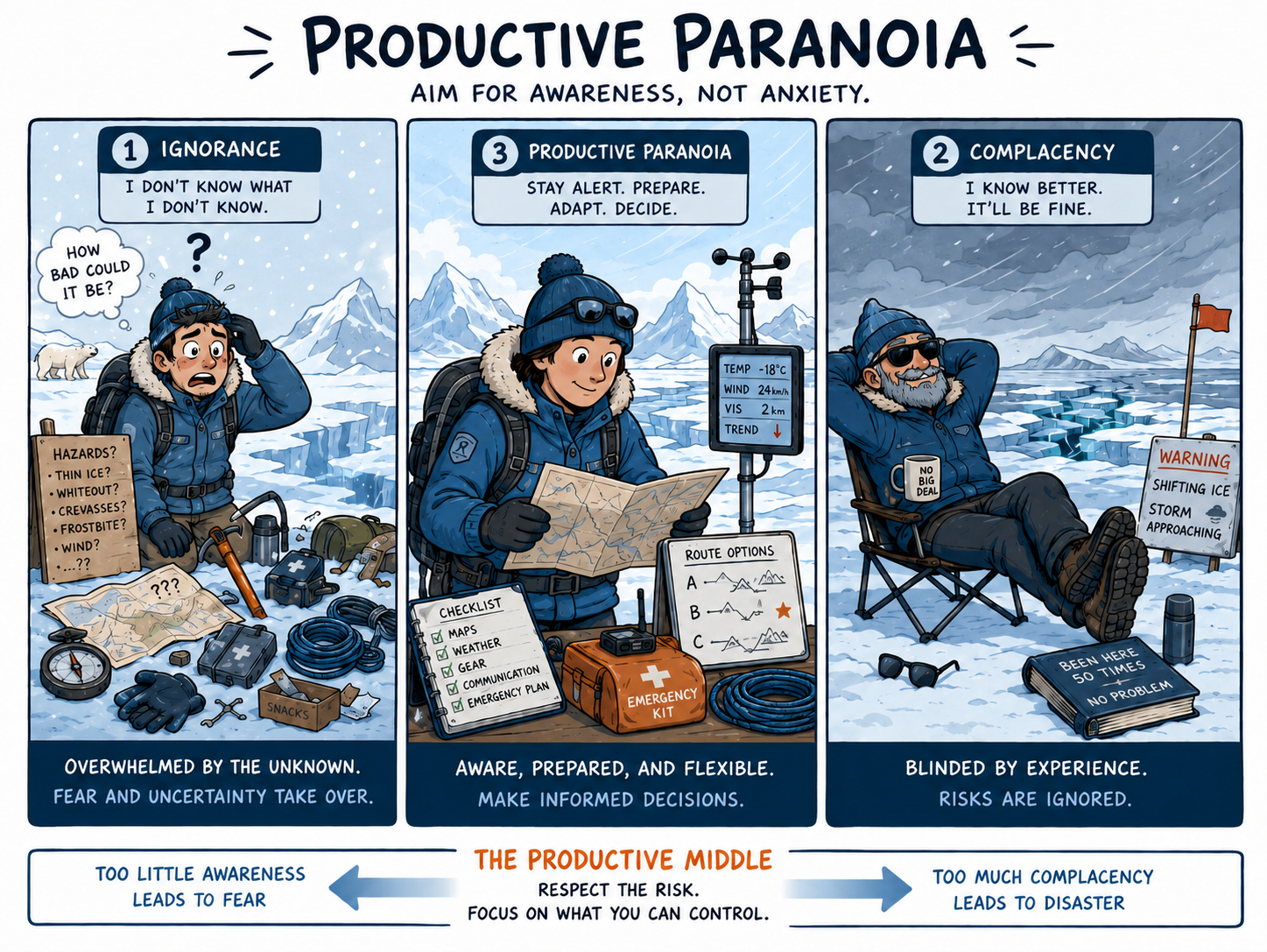
Productive Paranoia means being willing to challenge familiar KPIs, renegotiate definitions with services, and accept short-term discomfort so performance judgement stays honest. That is part of pathway and service improvement, not a separate “data project”.